Digital Fundraising Benchmark Report for Hospitals
The industry’s leading digital fundraising survey — insights and benchmarks drawn from non-profit hospital foundations across the country, validated and standardized by DHS.
Benchmarks from 43 hospitals. Survey insight from 123 foundations.
The 2024 Digital Fundraising Benchmark Report for Hospitals, produced by Digital Health Strategies in partnership with the Association for Healthcare Philanthropy, is the industry’s leading digital survey. Our insights and benchmarks are drawn from survey responses and data from non-profit hospital foundations.
This year’s benchmarks were compiled using fundraising performance data from a participant pool of 43 hospitals across the country. This participant pool is different from last year’s, so comparisons between editions should be avoided. The data only includes revenue from email, website and direct mail solicitation campaigns — not events, major giving, planned giving or employee giving.
Top 3 fundraising priorities for hospitals + health systems
Integration of annual giving with major and planned giving drives results
79% of foundations with “very well integrated” annual giving and major giving programs reported increased revenue YOY.
Only 15% of respondents using major donor tools said they work “very well” in helping convert high-value prospects.
Personalized engagement is key to donor value growth
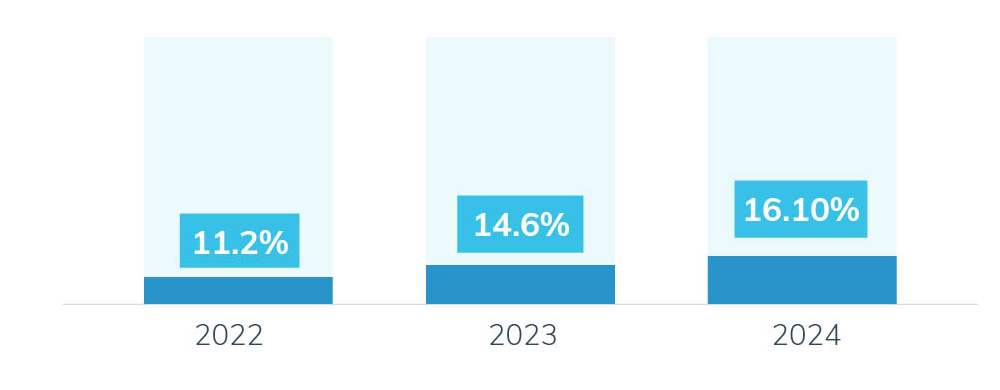
Online donor retention rates increased 20% YOY, demonstrating the loyalty of digital supporters.
More than 60% of foundations sending personalized renewal and reactivation messages saw increases in revenue.
Digital channels are fueling growth
Foundations with digital grateful patient programs were 2× more likely to report increases in new donors than those without.
Volume of new online donors grew 10%, despite a 30% decline in overall donors.
What separates growing foundations from the rest
Actionable data insights are critical to identify and engage high-value segments.
- Major gifts are a top revenue source for most respondents, but 50% more foundations saw a decline in $1k+ gifts YOY, highlighting the importance of mid-level pipeline.
- 75% of respondents reported that their major giving tools were not supporting their organizational goals as well as they want them to.
- Digital channels are a path to major giving, with online gifts of $10K or more increasing nearly 10% vs. the prior year.
A digital-first approach to timely, personalized communications helps retain existing donors and increase lifetime value.
- More than 60% of foundations that personalize communications based on last gift date saw increased revenue from existing donors.
- New donor acquisition is down, making retention a big opportunity, yet nearly 25% of respondents aren’t tailoring communications based on donor history or status.
- Foundations reporting YOY increases in revenue were 3× more likely to be sending segmented stewardship communications to share the impact of giving.
Invest in digital channels to drive new donor growth.
- Almost 60% of foundations with a digital grateful patient program in place reported increases in new donors.
- Acquisition slowed in the past 12 months, but new donor value is increasing. 7% more respondents reported that their average first-time gift amount had increased YOY.
- More email correlates to more revenue: 66% of foundations sending a higher volume of emails saw an increase in new donors.
Hospital foundation digital fundraising benchmarks
We sourced quantitative data from 43 hospitals across the country to develop benchmarks around donor acquisition, donor retention, and major donor development. Want to benchmark your program? Drop us a line at contact@digitalhealthstrategies.com
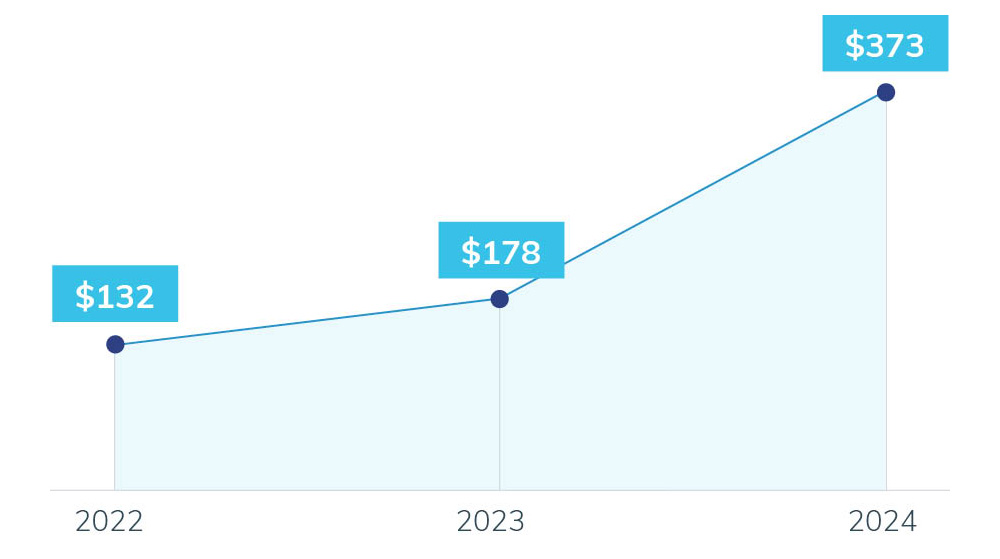
Average online gift has more than doubled vs. prior year
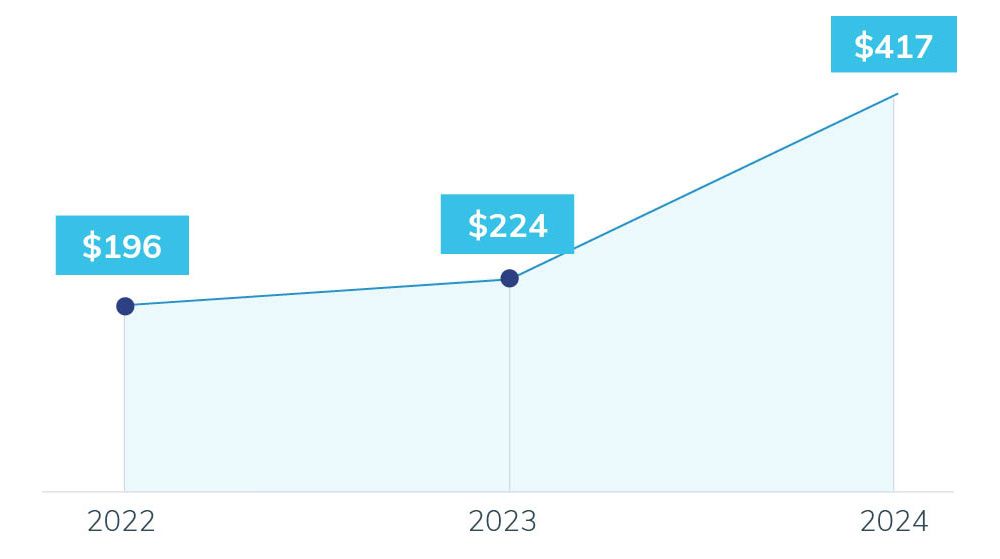
Average annual online donor value has grown significantly
Online donor retention continues to improve
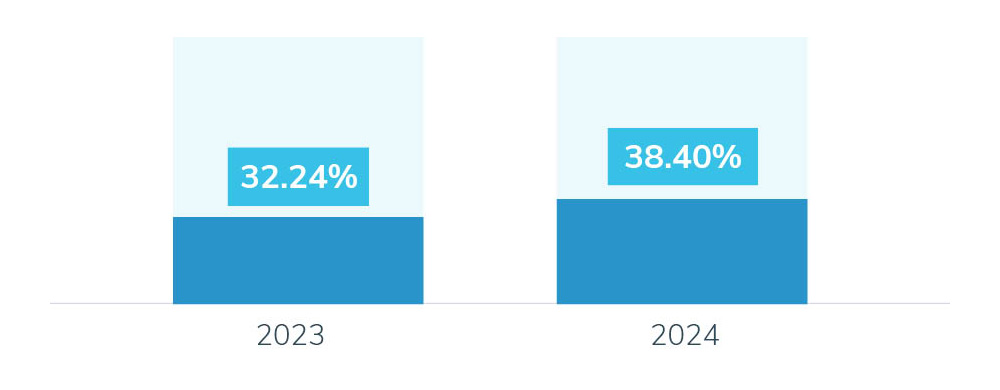
Proportion of donors giving online continues to grow
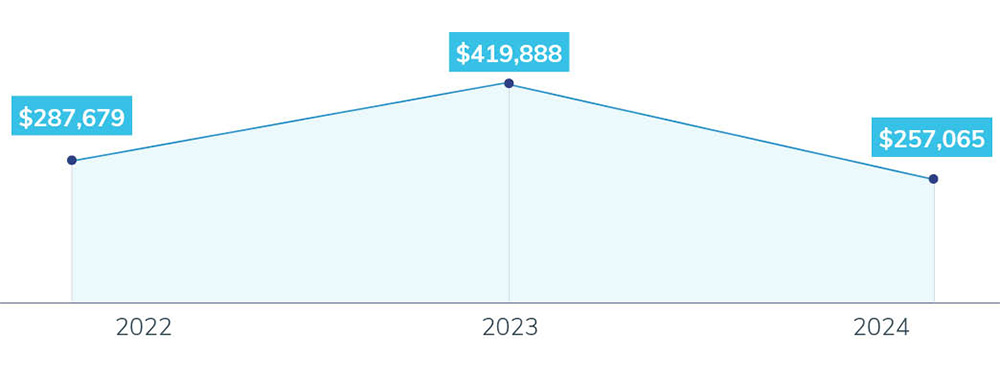
Online revenue has stabilized to 2022 levels
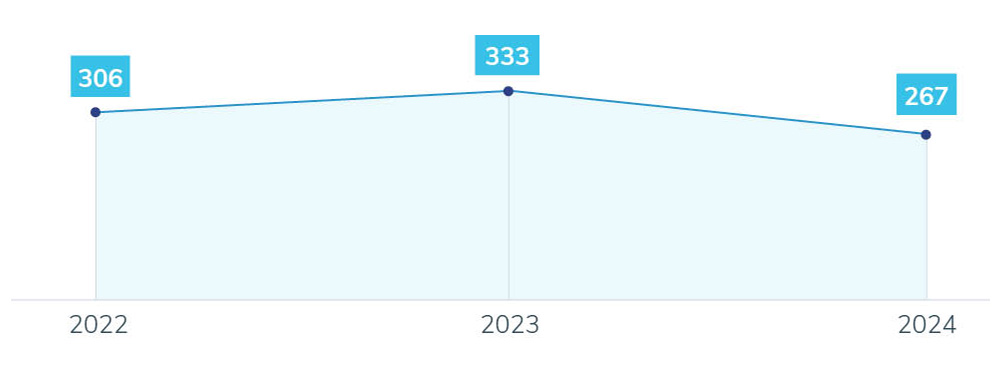
Total number of online donations decreased vs. prior years
Who’s behind the numbers
Survey participants
This survey was sent to members of the Association for Healthcare Philanthropy. Survey responses from 123 participants from the United States are included, spanning small community-based hospitals to large inter-state hospital networks.
Benchmarking participants
Benchmarks were developed from data sourced from 43 hospitals and hospital systems around donor acquisition, retention, and lifetime value. The data was validated and standardized by Digital Health Strategies and only includes revenue from email, website, and direct mail solicitation campaigns. Revenue from events, major giving, planned giving or employee giving is not included. All participants are based in the United States, spanning small community-based hospitals to large inter-state networks.
Use this checklist to support your fundraising strategy and planning
Major Donor Development
- Segment audiences by gift size and recency with a focus on encouraging $1K donors to join your giving societies and build your mid-level pipeline.
- Develop targeted planned giving communications for high-value donors to deepen commitment and boost key revenue streams.
- Identify data partners that can provide actionable insights to inform next best actions and enhance prospect outreach.
Donor Upgrades + Retention
- Use donor data to personalize communications based on gift history and fund interest to improve retention and lapsed reactivation.
- Send regular digital stewardship communications to provide real-time updates on gift impact and encourage further support.
- Ask donors for an extra gift during year end — even modest gifts boost revenue, deepen relationships, and grow lifetime value.
Donor Pipeline
- Implement a digital grateful patient program to drive up to 2× higher patient-donor conversion rates.
- Solicit patient prospects using email to reduce costs and enable rapid communication following care encounters.
- Target online audiences with higher ask amounts — initial gift value is highly indicative of donor lifetime value.
The 2025 benchmarks are here.
See where donor retention, mid-level giving, and grateful patient programs stand this year — and how your foundation compares.